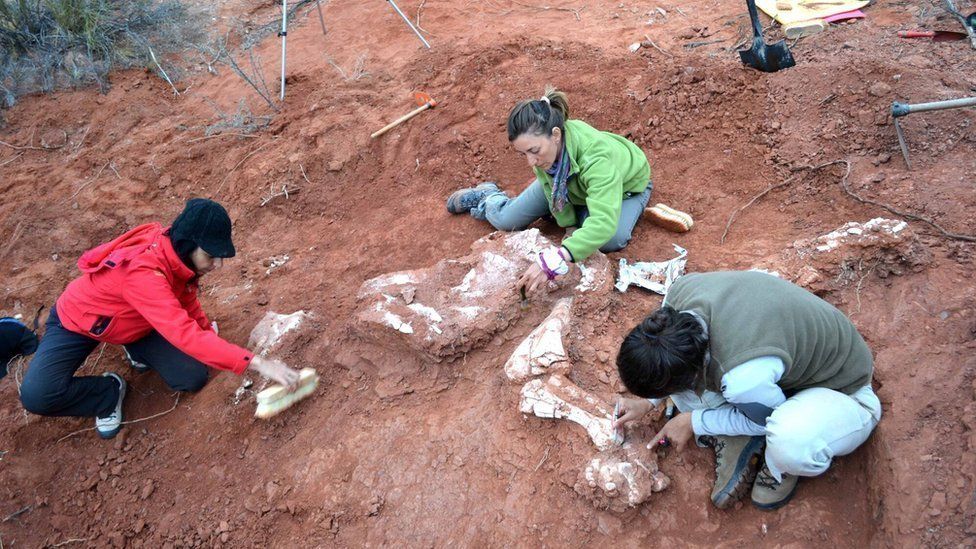

Isn’t it interesting to find out more and more information about the dinosaurs? How many different species of dinosaurs were present on earth? How did they look? There are so many questions, but not all are answered. It is mainly because with each and every findings of dinosaurs, some new information come up. So many films and books have come up, but it is not enough to quench the thirst of people who want more and more information about this amazing giant beast. Though they used to live on earth billions of years ago, but their stories have a long legacy and with each fossils, some new facts are unveiled. Recently, in Balde de Layes, Argentina, a team of expert unearthed something that will change the way we look at evolution. In July 2018, a report was published in a journal called Nature Ecology & Evolution. In that report, some of the amazing facts about this giant beast were mentioned. The excavators found some leg bones and number of vertebrae were discovered. It is assumed that the remains do not belong to an old creature, rather the creature is a young one and is as long as 23 feet. It had the ability to grow as long as 33 feet and weigh around ten tons. This species is considered the earliest of the lot to exhibit the characteristic of gigantism. The early Jurassic period is considered to be between 174 and 201 million years ago. Then there was a mass extinction that wiped off as much as 50% of all life on the earth. The new world that emerged after this event saw some of the dinosaurs reaching its colossal proportions. The famous dinosaurs during the Jurassic period were the sauropods Brachiosaurus and Diplodocus. They were the long-necked ones. In this long-necked group, you will also find Argentinosaurus, Dreadnoughtus, and Patagotitan. The new dinosaur remains that was discovered is believed to be a member of the sauropodomorphs. This giant beast used to live in the Triassic period, some 30 million years ago. The researchers have named the new dinosaur, Ingentia Prima. In Latin it means the first giant. The ingentia prima has been just like its popular descendants, Diplodocus and Brachiosaurus who were herbivorous and used all its four legs for walking. The neck and the tail might be a bit smaller, but otherwise it was the same. The interesting finding that was made by the researcher is that the giant didn’t grow in a constant manner, rather, it grew in concentrated spurts over a period of time. Moreover, the respiratory system of the giant is like a modern bird where special sacs are located inside their body to regulate the temperature and giving access to breathable air. This is how the origin of giant dinosaur has unfolded.

Experts Have Discovered A Dinosaur That Redefines The Origins Of Earth’s Largest Ever Creatures
- Trending
- Comments
- Latest







Welcome to Watch Jojo — your source for inspiring and trending true stories from around the world. From animals and history to lifestyle and the environment, we bring you viral content that truly resonates.
Discussion about this post