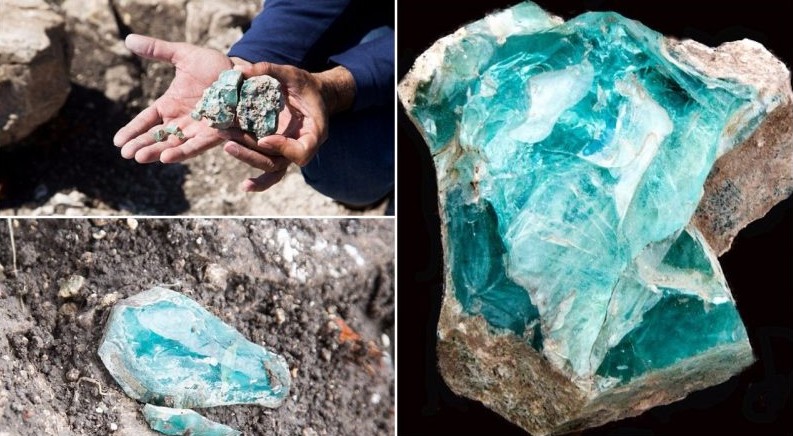

Do you know that today’s Israel was once ruled by the Romans? The Roman Empire was then the rulers of Europe and major parts of the Mediterranean. And who can doubt on the rich cultural heritage spread by the Romans all over the world. The beautiful works of art, the lavish sculptural architecture, the constructions works – the Romans ruled in everything for that matter. The power has changed hands today and the British decided to build a railway construction all the way from Palestine to India. The proposed railway route was decided through Jezreel Valley which is a fertile plain land in the northern district of Israel. The plain land is vast and it runs from Mount Carmel in the west to Jordan Valley in the east. The railway construction work started in 1902. The Ottomans who are also popularly referred to as the Turkish took the responsibility in starting the construction work. It was later on in 2015, during another phase of constructions, that the workers made an astonishing discovery from beneath the earth. Abdel Al-Salam Sai’id from the Israel Antiquities Authority was supervising the work at that time. He saw in a trench on the site, a complete floor covered with ash and pieces of glass. Sai’id presumed that there might be more to be discovered from the site and immediately halted the construction work. Archeologists visited the site immediately after that and it was concluded that the site had once been a place for manufacturing glasses. In one of the interviews, Sai’id told the Israel National News, that apart from broken glasses, they had also found vitrified bricks, clean raw glass chips. However, the glass productions were not made in a small scale. According to experts, some of the pieces weighed up to ten tons. The discovered constructions were from around 400 A.D., so you can imagine the magnitude of the discovery. These were the oldest relics found related to Israel. According to experts, these kilns belonged to an era when the Romans where expanding the usage of glass from mosaics to windows and a lot more. Hence, there was a constant requirement of supply of glasses. The glass was popularly known as Judean glass and it was way cheaper in price. According to Professor Ian Freestone of Archeological department, the discovery helped to understand the significance of glass trades in that era. These glasses spread all across Europe and the Mediterranean. The next thing that has caught the eyes of the experts is the fact that these glasses have still been in a reasonable condition even after so many years. So the manufacturing process ought to be special. Well, the next time you pass a construction site, take a dig and who knows, you might land upon something interesting.

Archaeologists Found These Ancient Relics In Israel – And They’ve Reshaped How We See The Romans
- Trending
- Comments
- Latest







Welcome to Watch Jojo — your source for inspiring and trending true stories from around the world. From animals and history to lifestyle and the environment, we bring you viral content that truly resonates.
Discussion about this post